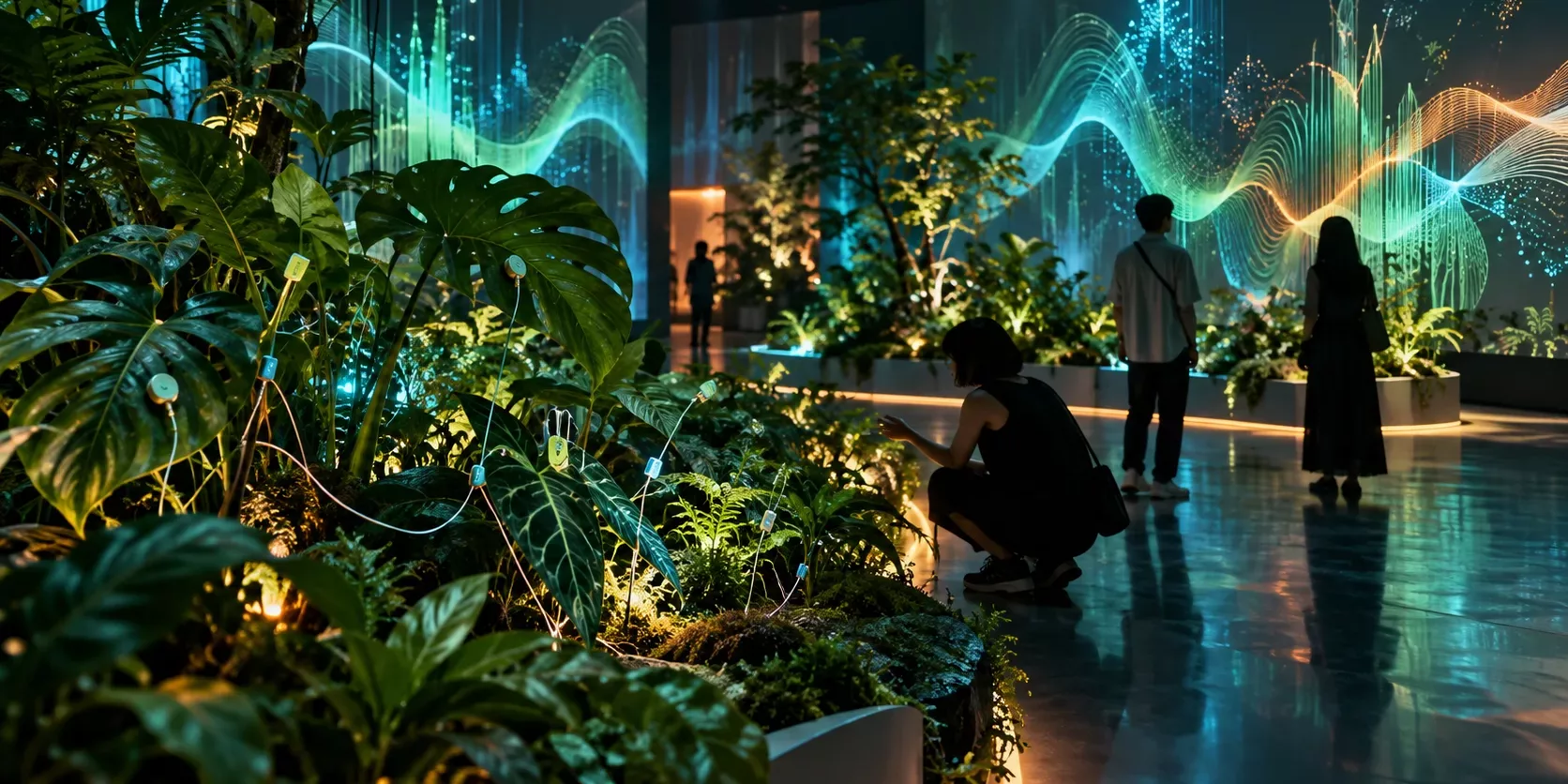
Image: MTECH Digital - AI-generated original illustration — Original editorial illustration by MTECH Digital, created with AI assistance.
At the Da Nang Museum of Cham Sculpture, When Form Reemerges explored augmented heritage through digital artworks and AR, with guided sessions during November 2026.
Key takeaways
- When Form Reemerges ran at the Da Nang Museum of Cham Sculpture from October 31 to November 8, 2026.
- The exhibition used augmented heritage and AR to visualize missing portions of historic Cham objects.
- Curator-led tours were scheduled on November 3 and 7, both within the W45 reporting period.
- Da Nang tui and digital artist Tran Viet Huy were named as project creators.
- For MTECH, digitally interpreting a heritage object requires clear separation between documented material and speculative reconstruction.
AR meets Cham heritage in Da Nang
When Form Reemerges (Vietnamese: Khi hình hài trở lại) was presented at the Da Nang Museum of Cham Sculpture from October 31 to November 8, 2026, as part of Da Nang Creative Arts Connection 2026 (DACC 2026). The city’s official tourism portal describes a digital interactive artwork that applies augmented heritage and augmented reality (AR) to help visitors imagine missing elements of historic Cham objects.
This was not a product launch on November 3. The exhibition had been announced on October 26; its public presentation and two curated visits on November 3 and November 7 fell within this report’s November 2–8 editorial window. The official curator-tour listing confirms both dates and a 14:00–15:00 time slot for each.
What the audience encounters
The curatorial concept starts from the incomplete physical form of surviving artefacts. Digital layers suggest possible missing forms and invite a contemporary conversation about the object’s cultural context. The organizers identify Da Nang tui and digital artist Tran Viet Huy (Novaillusion) among those behind the presentation; curator Nguyen Hoang Huong Duyen is named in the tour program.
What the sources do not specify
The public listings do not describe the hardware model, device count, tracking method, rendering engine or measured visitor engagement. It would be premature to claim use of a particular headset, smartphone application, marker system or AI reconstruction technique. The displayed interpretations should not be mistaken for archaeologically verified original forms.
Lessons for interactive exhibitions and brand experiences
- Content provenance: visually distinguish original artefacts, documented hypotheses and creative digital extensions.
- Visitor onboarding: a short guided narrative can explain how and why an AR layer changes perception.
- Delivery architecture: test visibility, tracking stability, device maintenance, accessibility and multilingual content on site.
MTECH analysis: similar techniques may translate to cultural tourism, real-estate heritage storytelling and educational activation. Each use case requires its own feasibility assessment; the public event listing does not establish performance or commercial ROI.
Dates and verification
The installation ran October 31–November 8 at the museum. Tour sessions on November 3 and 7 are independently described on a separate program page from the same official city tourism portal. The exhibition overview provides the description of the AR concept and creators.