Image: MTECH Digital - AI-generated original illustration — Original editorial illustration by MTECH Digital, created with AI assistance.
French artists and Vietnam Media Lab presented an interactive plant-based sound and visual installation in Ho Chi Minh City from 23–25 October 2026.
Key takeaways
- ORYMI was presented at Galerie Quynh in Ho Chi Minh City from 23 to 25 October 2026.
- French artists Baptiste Pierre and Leslie Morrier collaborated with Vietnam Media Lab.
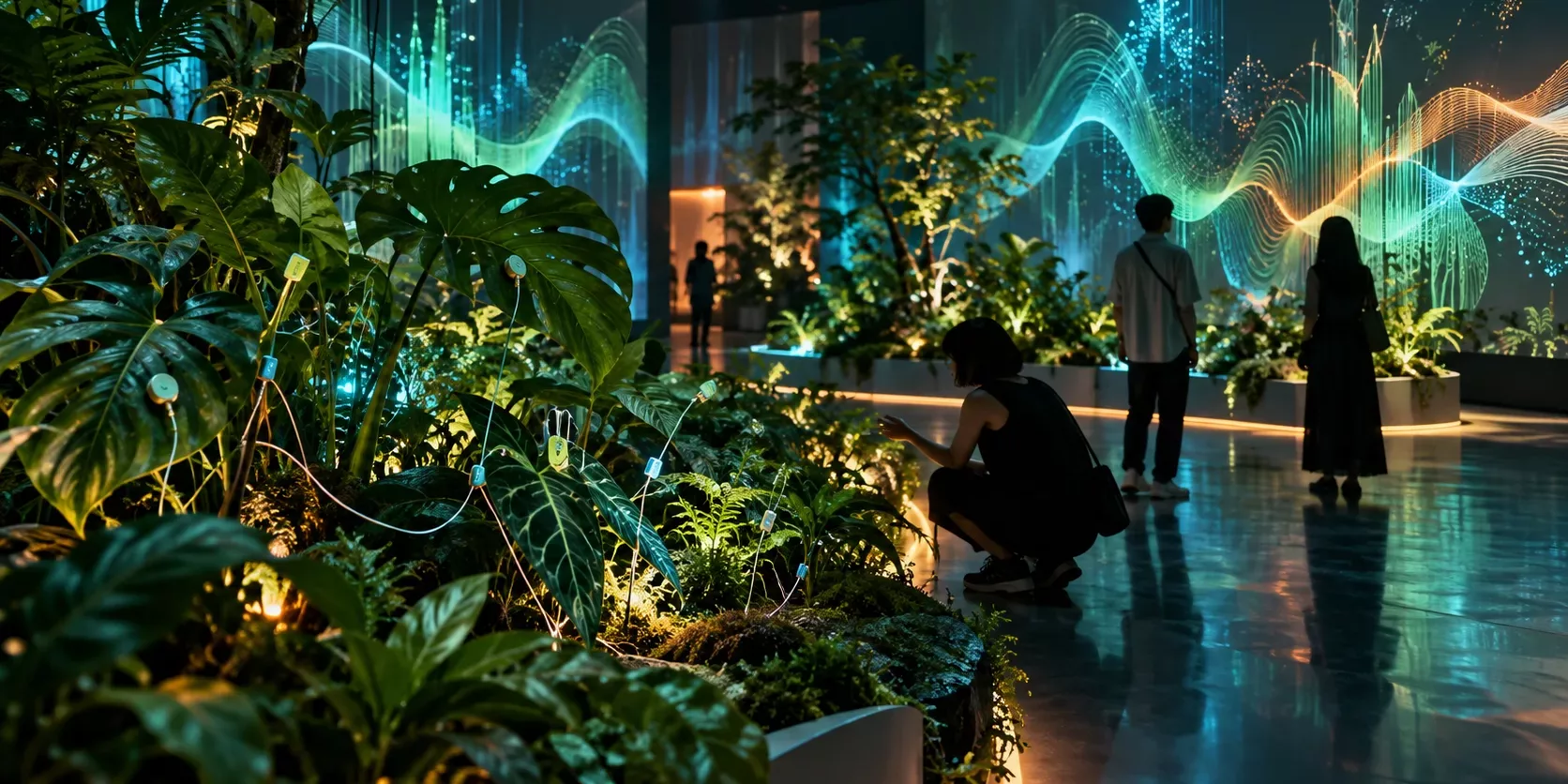
- The installation translated plant bioelectrical signals into sound and responsive visuals.
- The work formed part of the French Institute in Vietnam’s Entre les lignes – Giữa dòng program.
- For event activations, clear visitor feedback, sensor stability and accessibility are essential.
What was ORYMI?
ORYMI was an interactive sound and visual installation presented at Galerie Quynh, 118 Nguyễn Văn Thủ, Ho Chi Minh City, from 23 to 25 October 2026. The French Institute in Vietnam’s event description identifies it as part of the 2026 digital-arts program Entre les lignes – Giữa dòng. French artists Baptiste Pierre (Ctrl Alt Supp) and Leslie Morrier worked with Vietnam Media Lab on the presentation.
How plants became an interface
The artwork used biological electrical signals from living plants as inputs that were translated into an evolving sound environment. Interactive visual elements developed with artist Nguyễn Hoàng Giang of Vietnam Media Lab extended the audio into images responding to visitor movement. The program and installation details were also reported by Ho Chi Minh City Television (HTV).
Dates and venue matter
ORYMI was scheduled for 23–25 October at Galerie Quynh; the related Encore & Encor live electronic music performance was scheduled separately for 24 October at Ben Thanh Theatre. These are two distinct experiences, not one event at a shared venue, according to HTV’s program listing.
Why it matters for event technology
MTECH analysis: ORYMI illustrates an alternative to common event interfaces. Rather than asking visitors to tap through fixed screens, an installation can translate environmental sensor signals and audience movement into audiovisual feedback.
- Brand storytelling: nature, sustainability and life-science themes can become tangible participatory media.
- System architecture: signal acquisition, smoothing, mapping, audiovisual engines and fallback behavior are key design layers.
- Visitor experience: visible cause-and-effect and a short onboarding cue can prevent unfamiliar interaction from becoming confusing.
These are potential applications, not claims that ORYMI was commercially deployed for a brand. No published independent latency, sensor-accuracy or audience-impact measurements were identified in the cited accounts.